
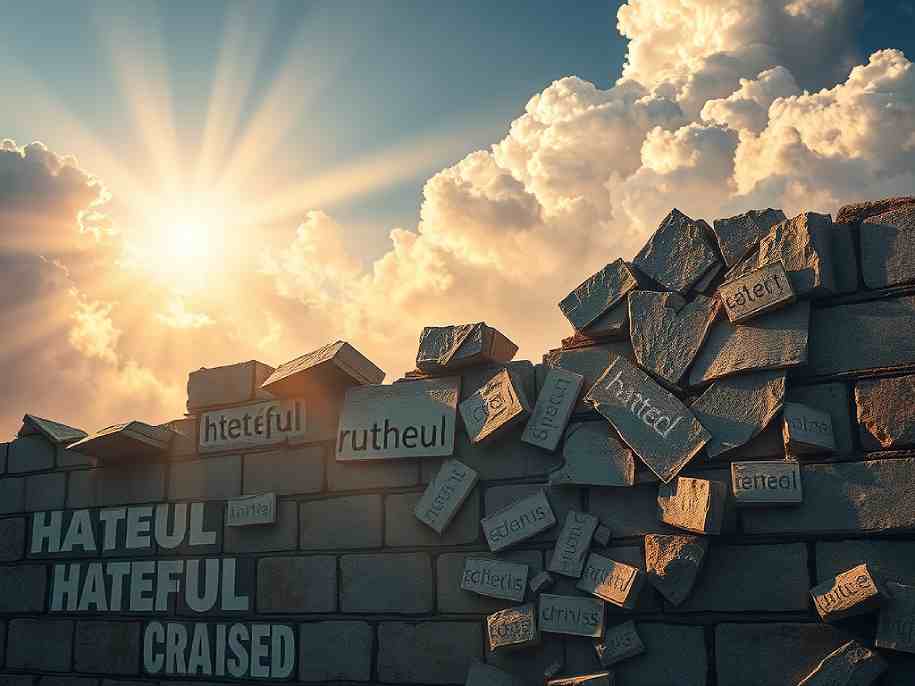
Labels create division when Christians use them to judge, condemn, or separate themselves from others. The truth is that labels create walls between us and those we are called to love. Perhaps some believers have forgotten what it means to be a Christian. We label people as hateful, crazed, stupid, ruthless, lost, or unworthy. Sometimes we even speak as though we can send them to hell.
But labels create walls. They keep us from forming relationships, showing compassion, and reflecting the heart of Jesus.
Is this really what Christianity is meant to be about? When we focus on condemning others, we lose sight of Jesus’s core teachings. His message is compassion, forgiveness, mercy, and love.
Instead of building bridges, labels create walls. They drive people further apart. If we truly want to reflect Christ, we must see others as people who need grace.
That grace still matters when someone’s beliefs, choices, or life experiences differ from our own.
Are we being truthful when we say we love everybody? When we say we do not see color, are we avoiding honest reflection? It is time to reconsider how we perceive and speak about others. Instead of turning to judgment, we can choose empathy, humility, and kindness. In doing so, we live out the deeper meaning of Christianity: loving our neighbors as ourselves.
God Tears Down Walls and Calls Us to Christian Unity

God is not in the business of building walls. Throughout the Bible, we see God reaching across boundaries. He welcomes the indifferent and invites everyone into a relationship with Him. Jesus spent time with those society had cast aside. He broke through barriers of discrimination and judgment.
By following Jesus’s example, we become agents of reconciliation. We help break down the divisions that separate us. This means seeking understanding, offering compassion, and treating everyone with respect and dignity.
It also means challenging our own biases. We must strive to see the worth in every person. When we embrace empathy, we begin to dismantle walls of division. We also help build a world where people feel valued, accepted, and loved.
When we tear down walls of prejudice and misunderstanding, we open our hearts to genuine compassion. This is the true essence of Christianity—not building walls, but building bridges. We must extend the same grace and compassion that God extended to us.
How Self-Righteousness Builds Walls and Fuels Division
Have we become so “religious” that we have lost sight of who God is and why we serve Him? Have we forgotten the aroma of our own sin? That is what the Pharisees did. They noticed other people’s sins while ignoring or justifying their own.
We must be careful not to condemn people through religious thinking. When we do, we may be condemning the very people Jesus came to love and restore. While we are focused on “being a Christian,” let us not forget to be kind.
Hebrews 13:2 reminds us not to overlook kindness toward strangers. Sometimes, when we welcome and care for people we do not know, we may be encountering something far greater than we realize. Our hospitality can become an act of faith, compassion, and obedience to God.
Too often, we let rituals and traditions overshadow the heart of God. When we focus only on rules or outward appearances, we miss the deeper meaning of grace and mercy. True faith is not about appearing righteous. It is about humbly recognizing our own need for forgiveness and extending that same compassion to others.
The Good Samaritan: Love Your Neighbor Beyond Labels
The Parable of the Good Samaritan in Luke 10:25-37 is a story of true compassion. Jesus tells of a Jewish traveler who was beaten, robbed, and left for dead on the road to Jericho.
A priest and a Levite—both “holy” men—ignored the traveler. But the Samaritan, a man they despised, showed compassion. He treated the traveler’s wounds, took him to an inn, and paid for his care.
When Politics Overrides Compassion and Creates Spiritual Division
Do we do the same thing when politics begins to shape our Christian morals? When we deny compassion because of party affiliation, we dishonor God. When we refuse to help someone because they voted differently, we insult Him.
Do our biases or politics determine who we help or how we show kindness? As Christians, we should step outside our comfort zones and offer grace to those who need it, just as the Samaritan did. When we choose mercy over judgment and action over indifference, we fulfill the deeper call to love that Jesus taught.
The Good Samaritan’s actions cut through social and religious boundaries. He did not see an enemy or a stranger, but a fellow human in need. His compassion teaches us that true love is unconditional and unrestricted by nationality, doctrine, or political affiliation.
Love Tears Down Walls

If labels build walls, love is what begins to tear them down. We should never allow religion or doctrine to blind us from seeing the humanity in others. Nor should we let it silence the call to love.
That kind of love begins with humility. It shows up through gentleness, hospitality, and a willingness to honor God in the way we treat people. When we live this way, we may encounter Him in unexpected places.
Jesus makes this clear in Matthew 22:36-39. The greatest commandment is to love God. The second is to love our neighbor as ourselves. These two commands belong together.
Because love is active, it reaches across differences. It listens before judging. It chooses understanding over condemnation. Labels create walls, but kindness and humility help tear them down.
1 Corinthians 13:4 reminds us that love is patient and kind. True love does not compete for attention. It is not jealous, boastful, or proud. It does not use arrogance to rise above others.
So when we say we love God, our treatment of people must reflect that love. We cannot worship God while refusing to see the value of those He created. Love calls us to humility, mercy, and honor.
As we move through life, we may encounter God in the very people we are tempted to overlook. When we recognize that labels create invisible walls, we can choose a better way. We can break them down with love and acceptance—not hate, and not rejection.
Sons of Thunder
Because of their impulsive and intense personalities, Jesus called James and John, the sons of Zebedee, “Sons of Thunder.” These brothers were part of Jesus’s inner circle. They walked with Jesus and witnessed His miracles.
Yet in Luke 9:51-56, they wanted to call down fire from heaven on the Samaritans for rejecting Jesus. Their desire for judgment revealed that they misunderstood His mission. Though they spent time with Jesus, they still did not fully know His heart.
Some Christians today still carry the attitude of the sons of thunder. They want to destroy others who disagree with their version of Christianity. Instead of responding with compassion and understanding, they turn to harsh judgment, exclusion, or condemnation. In doing so, they miss the heart of Christ’s message.
Perhaps we should examine our own motives and attitudes. Our zeal for God must be tempered by grace. Let us seek to embody faith that welcomes, heals, and reconciles.
We should not build walls of division. We should help tear down what divides and destroys.
Invisible Spiritual Barriers
Fellow Christians, do you not know that we are in a spiritual battle? The apostle Paul reminds us in Ephesians 6:12 that our fight is not with each other. Our struggle is against spiritual powers and forces of darkness.
When we face conflict or opposition, we should remember this truth. Our true enemies are not people. They are the unseen spiritual forces working behind the scenes.
Recognizing the spiritual dimension changes our perspective. It shifts us away from personal animosity and toward the broader struggle against darkness.
Therefore, we should show compassion toward those we disagree with. We should pray, seek grace, and stand firm against the real enemy. We should also build a unified community grounded in faith, not division and judgment.
The Greatest of All Walls: Deception

When Jesus’s disciples asked, “What will be the sign of Your coming, and of the end of the age?” He answered, “Take heed that no one deceives you.” Our enemy is cunning beyond human intelligence.
He sometimes appears as an angel of light. He may pretend to be from God. At times, he may even try to present himself as God.
Deception does not always come dressed as evil. Often, it masquerades as good. It may even sound spiritual while leading believers away from the truth of God’s word.
Discernment Protects Christian Unity from False Light
The apostle Paul warned that Satan can disguise himself as an angel of light. That is why we must test every spirit and teaching against the Word of God. Our faith must rest on Scripture and the guidance of the Holy Spirit.
In these times of confusion and division, we need spiritual clarity more than ever. It is easy to be swept away by convincing voices or popular opinions. But real discernment comes from a heart connected to God.
We must cultivate humility, prayer, and a willingness to seek God’s wisdom. We should not follow something simply because it sounds right or feels familiar. The greatest protection against deception is a life grounded in Christ.
Stay Alert, Love Your Neighbor, and Keep Your Eyes on Christ
As we anticipate Jesus’s return and navigate the complexity of our age, let us heed His warning. Stay alert. Remain steadfast. Keep your eyes fixed on Him.
By doing so, we protect ourselves from spiritual deception. We also help build a community that walks in light, love, and genuine faith.
Questions About Labels, Division, and Christian Love
What does the Bible teach about labels and division?
The Bible teaches that believers should pursue love, humility, mercy, and unity. Labels become harmful when they are used to judge or separate people. They work against Christ’s command to love our neighbors.
For a broader overview, GotQuestions also explains what the Bible says about division among believers.
Why do labels create walls between people?
Labels reduce people to one idea, one mistake, one belief, or one difference. They make it harder to listen, forgive, understand, and see the image of God in others.
How can Christians tear down walls instead of building them?
Christians tear down walls by choosing compassion over condemnation, prayer over pride, humility over self-righteousness, and love over judgment.
Discover more from BELIEVING FAITH
Subscribe to get the latest posts sent to your email.

Amen 🙌
Hello, Great commentary.
We can use this reminder as to who we are as Christians or non Christians. Sometimes we may not recognize our own self rightness and circular thinking; thereby building walls of exclusiveness.
Thank you for kindly uplifting and sharing.
Thanks for reading. Self-righteousness blinds us, making it difficult to see our true selves.
Backbiting, gossiping and slandering are similar to witchcraft because the devil uses those things against us. I thank God He is able to break down the walls and barriers and uproot the stronghold. Great post!
Amen, Beverly. Thanks for reading, and for your comment.