
The conversation about abortion and Christianity is personal, difficult, and often emotional. As a pro-life Christian, I believe abortion is wrong. But I also believe God gives every person free will. Because of that, I believe Christians should respond with compassion, not condemnation.
That is why this conversation matters so That is why this conversation about abortion and Christianity matters so much. We can hold strong convictions and still speak with humility, respect, and grace. We can hold strong convictions and still speak with humility, respect, and grace.
Some Christians believe they must enforce biblical teaching on others. I understand that concern, but God does not force Himself on anyone. If He does not force obedience, then we should be careful about trying to force it too. Instead of acting as judges, we should follow Jesus’ example of compassion over condemnation.
So when we talk about abortion and Christianity, we should be honest and direct. But we should also be guided by grace, free will, and understanding.
Pro-Life vs. Pro-Choice: A Christian Perspective
The labels pro-life and pro-choice can be helpful, but they can also be too simple. They take a complicated issue and squeeze it into two categories. In my conversations about abortion, I have found that many people who oppose it identify as pro-life.
In discussions about abortion and Christianity, my concern is that this view can sometimes focus only on the life of the embryo or fetus. It may not give enough attention to the women, families, and children affected by pregnancy, birth, and life after birth.
That does not mean concern for the unborn is wrong. It means our concern for life should not stop there.
If we say we are pro-life, we should also care about child welfare, mothers in crisis, families under pressure, and vulnerable children who need support after they are born.
People who identify as pro-choice usually believe each person has the right to decide whether and when to have children. That includes the decision to end an unplanned pregnancy. From that point of view, choice is a basic human right.
As Christians, we may disagree with that decision. Still, when discussing faith and abortion, we should understand why people see it that way before we respond.
Roe v. Wade
To understand the current debate, it helps to look back at Roe v. Wade. This was the landmark U.S. Supreme Court decision that recognized a woman’s constitutional right to choose an abortion without undue government interference.
That ruling struck down many abortion laws and changed the national conversation about abortion rights.
In 1969, Norma McCorvey, known in court as Jane Roe, became pregnant with her third child while living in Texas. At the time, abortion was illegal there except to save the mother’s life.
She challenged the law in a lawsuit against District Attorney Henry Wade, arguing that Texas abortion restrictions violated the Constitution. A federal district court ruled in her favor, and Texas appealed the case to the U.S. Supreme Court.
The decision in Roe v. Wade sparked a national debate that continues today. One of the biggest questions was this: should abortion laws be decided by the people and their elected lawmakers, or by the Supreme Court?
In 1973, the Supreme Court ruled in Roe’s favor. It held that the Fourteenth Amendment’s protection of privacy included a woman’s decision to have an abortion. The Court treated that decision as part of a person’s private, intimate choices.
At the same time, it made clear that the right to privacy was not absolute.
Dobbs and the End of Roe
In June 2022, the Supreme Court decided Dobbs v. Jackson Women’s Health Organization. That decision overturned Roe v. Wade and returned abortion regulation to the states.
Since then, abortion law in the United States has become a patchwork. Some states have expanded access, while others have passed strict limits or near-total bans.
That means the debate has moved from one national standard to many state-by-state battles.
Christian Views on Abortion and Politics
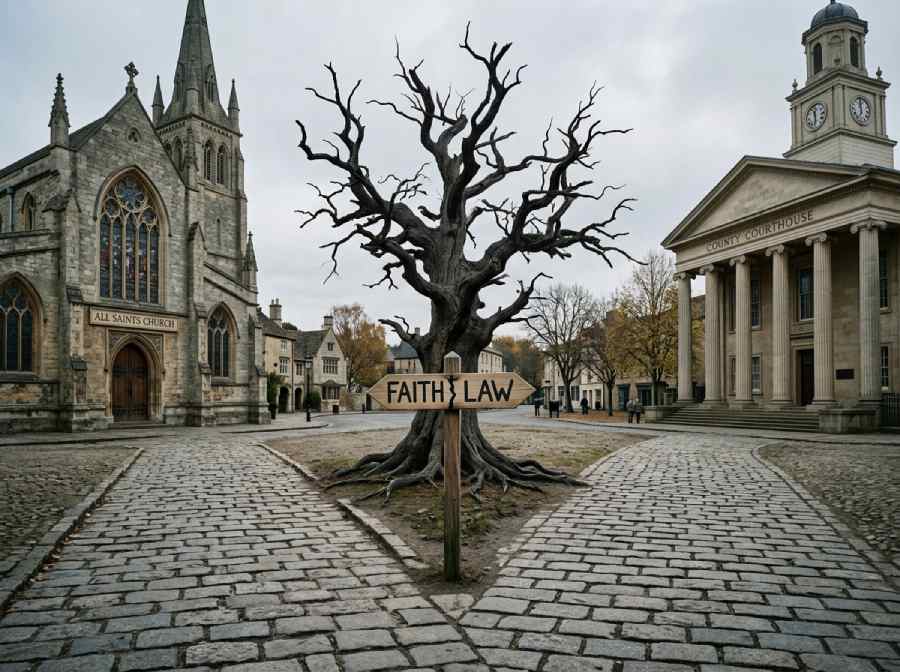
For Christians, abortion is not just a legal or political issue. It is also a question of faith, conscience, and how we apply God’s truth in a divided culture. That is why Christian views on abortion should be shaped by Scripture, not just politics.
The question is not whether Christians should care. We should. The question is how we care and whether we can tell the difference between God’s law and political power.
I believe Christians should stand against abortion because Scripture teaches, “You shall not murder.” But Christian faithfulness cannot be reduced to one issue. God’s law calls us to more than opposing one sin.
It calls us to obey Him in every area of life. So the real question is not only whether abortion matters. It does. The question is whether our biblical response to abortion reflects the whole of God’s truth with consistency, humility, and obedience.
Christians are called to reflect the character of Christ in what we believe and how we live. That means pursuing humility, truth, righteousness, love, peace, patience, kindness, forgiveness, and unity, even when the topic is as difficult as abortion.
I once heard someone say, “To be a Christian is to be a Republican is to be pro-life.” I disagree. Christianity cannot be reduced to a political party, and faithfulness to Christ is bigger than any partisan identity.
Abortion is often framed as a Christian issue, but much of the public fight around it is political. Politicians understand the influence of Christians, and they often seek that support for broader political goals.
That is why Christians should be careful not to confuse loyalty to Christ with loyalty to a party.
Is Abortion the Only Sin Christians Should Address?
Why Free Will Matters
When we talk about abortion and Christianity, we should remember that God’s gift of free will is central to how He relates to humanity. God does not force obedience, belief, or repentance on anyone.
He calls us to follow Him, but He still allows us to choose. That should shape the way we think about sin, responsibility, law, punishment, and the broader Christian response to abortion.
Jesus, Mercy, and Judgment
When Christians call for punishment, we should remember the story of the adulterous woman in John 8. The religious leaders brought her to Jesus because they wanted judgment.
Jesus responded differently. He exposed their sin and showed her mercy. Then He said, “Neither do I condemn you; go, and sin no more.” That story does not excuse sin, but it does show us something important: Jesus joined truth with compassion.
God Forgives Sin
Jesus was the only one in the crowd without sin, yet He chose mercy instead of condemnation. That should remind us that we are not called to act as final judges.
We are called to follow Him in truth, humility, and compassion.
That does not mean we ignore sin or pretend abortion is not serious. It means we should seek to protect life and guide others toward what is right with kindness instead of punishment.
At the same time, each person is still responsible for the choices they make.
A Consistent Pro-Life Witness
That same mercy should also shape how Christians think about the broader meaning of valuing life. Sometimes the public debate over abortion reveals gaps in how people talk about protecting life, especially in conversations about Christian ethics and abortion.
If we care about the unborn, we should also care about health, safety, poverty, family support, and the well-being of vulnerable people. A consistent Christian witness should hold these concerns together with compassion and integrity.
Abortion and Christianity After Dobbs
This need for consistency matters even more when thinking about abortion and Christianity after Dobbs v. Jackson Women’s Health Organization. The abortion debate has moved into legislatures, courts, churches, and communities across the country.
With laws now differing sharply from state to state, the Christian response matters even more. A faithful Christian perspective on abortion should be clear, compassionate, and consistent.
Christians should speak with conviction. But we should also speak with humility, compassion, and honesty about both sin and grace. We are called to uphold life while remembering that faith cannot be forced. Righteousness cannot be legislated into the human heart.
In a post-Dobbs America, the question is not only what the law allows. The deeper question is whether Christians will reflect the character of Christ in how we respond.
Discover more from BELIEVING FAITH
Subscribe to get the latest posts sent to your email.
