
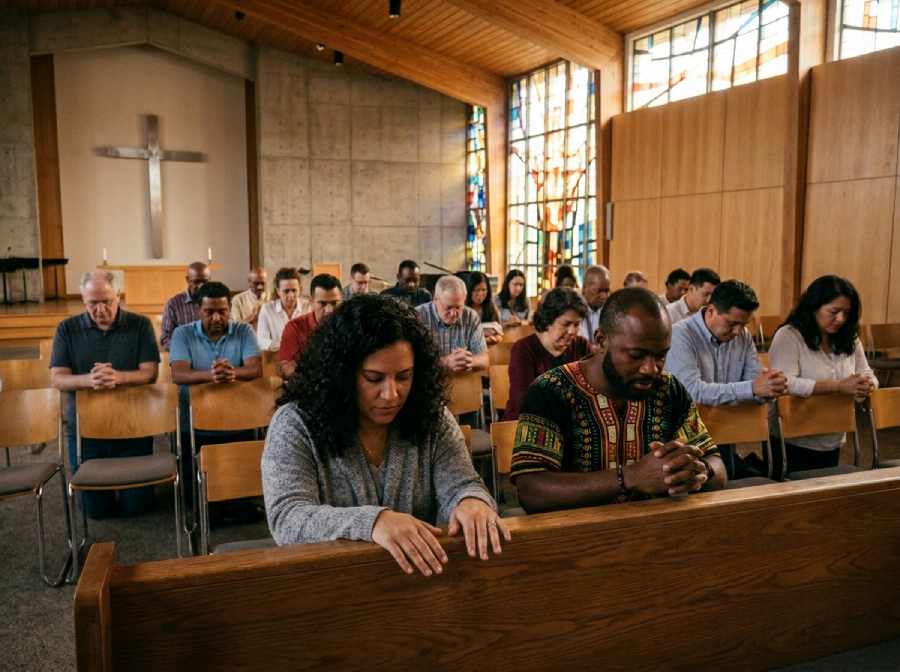
We live in a world where sermons are available on demand, worship music is always within reach, and Christian teaching is only a search away. So, it is fair to ask an honest question: Do Christians still need church?
For some, the question is about convenience. For others, it comes from church hurt, disappointment, or exhaustion. Many people love Jesus but wonder whether gathering with a local church is still necessary when private faith feels easier and less complicated.
Beneath the question is a deeper longing: to belong, be known, and grow in faith with others. That is why the question, “Do Christians still need church?” deserves more than a quick answer.
The church is not merely a place believers attend. It is one way God shapes our lives, nourishes our souls, and helps us keep our eyes on Jesus.
Church Is More Than a Place to Get Christian Content
A sermon can teach you, but it cannot fully know you. A worship playlist can encourage you, but it cannot pray with you when life unravels.
Online Christian content can be helpful. But it cannot replace corporate worship and Christian fellowship that help us grow spiritually.
Why does that difference matter? Because Christianity was never meant to be merely informational, it is deeply relational. We need more than the truth of the gospel explained to us. We need to see truth lived out among us.
Why the Church Matters Right Now
We can feel connected all day and still feel lonely. That is one reason church matters so much. We need spaces where people see us, notice us, and care for us. Research on loneliness and relational health helps explain why the church remains important in a digitally connected but often isolated culture. Recent research by Barna Group and Gloo found that church attendance is linked to relational health, mentorship, and meaningful connection.
Church Helps Us Be Known
We need people who realize when we are absent. We need people who ask how we are really doing, pray for us, challenge us, and walk with us through ordinary life.
Ecclesiastes 4:9-10 captures this well: two are better than one, because when one falls, the other can help them up.
Some of our deepest spiritual growth happens slowly in relationships we build at church. It happens in conversations after service, in small groups, in serving alongside others, and in prayer.
In a church community, care becomes personal. People notice when you have been missing. When you need prayer, someone prays for you by name. When life feels heavy, a brother or sister in Christ may bring a meal, sit with you in grief, or remind you that you are not alone.
Spiritual growth often happens through these simple moments: a conversation after worship, a small group where you feel less alone, or the wisdom of an older believer who has walked with Christ for many years. Over time, these ordinary acts of love remind us that we are seen, supported, and not meant to follow Jesus alone.
What the Bible Says About Gathering Together
In Scripture, the church is not optional but essential. The Bible makes it clear that we are to encourage one another, bear one another’s burdens, confess sin, serve one another, and gather together.
These commands assume more than occasional contact. They point to a shared life.
The Church Is a Body, Not Just a Service
Hebrews 10:24-25 calls believers not to give up meeting together. Galatians 6:2 tells us to bear one another’s burdens. First Corinthians 12:12-27 describes the church as a body, and a body functions best when its members remain connected.
As Hebrews 10:24-25 calls believers to consider one another and stir one another up to love and good works, Scripture shows that gathering is part of how Christians help one another endure.
This does not mean that attending church automatically makes you spiritually mature. It does mean that Christian growth was designed to happen within the life of the church. God does not save us into private spirituality; He gathers us into a family.
What If Church Has Been Hard for You?
If church has been painful, disappointing, or exhausting for you, that matters. You do not have to pretend it did not affect you. Some church experiences leave real wounds, and healing can take time.
I know this personally. I felt deeply wounded when no one from my local church came to check on me during my addiction to crack cocaine. So, it is understandable to feel cautious.
Still, painful experiences with the church do not erase God’s good design for the church.
Sometimes healing comes through slowly finding a healthier place to belong. Not every church is healthy, and not every church will be the right fit. Still, isolation does not restore what wounds have taken. Often, healing begins when you are gently welcomed into an honest, grace-filled church again.
How to Reconnect with Church Meaningfully
Take One Small Step Back
If church feels distant right now, start with small steps instead of dramatic decisions. Visit a church. Stay after the service for one conversation. Try a small group.
Ask meaningful questions, such as “Is this a place where people do more than recognize me—where they can truly get to know me?”
Also pay attention to whether Scripture is honored, whether humility is present, and whether the church makes room for real discipleship.
A healthy church will not be perfect, because no church is. But it should be a place where truth is taken seriously, people are cared for, and belonging becomes possible over time.
Common Questions About Why Church Still Matters
Can you be a Christian without going to church?
A person can belong to Christ without perfect church attendance, but Scripture still presents Christian community as essential for growth. Hebrews 10:24-25 calls believers not to give up meeting together, but to encourage one another.
What if the church has hurt me?
Your pain matters, and wisdom is important. Hard experiences do not erase God’s design for community, but they may mean you need time, counsel, and a healthier church environment. Galatians 6:2 and Ecclesiastes 4:9-10 remind us that God made people to help carry one another.
Why does church still matter if sermons are online?
Online sermons can teach and encourage, but church is more than receiving teaching. First Corinthians 12:12-27 describes believers as one body, which includes belonging, service, encouragement, accountability, and real connection.
A Final Word: You Weren’t Made to Follow Jesus Alone
Do Christians still need church? Yes. We still need worship, encouragement, accountability, service, and community. We still need reminders that faith is not something we carry alone.
Even in a digital and distracted age, the gathered people of God are still a gift. Not because the church is flawless, but because God, in His wisdom, still uses Christian community to form us, strengthen us, and help us keep going.
If this encouraged you, consider taking one small step toward Christian community this week. Visit a church, reach out to a believer you trust, or share this post with someone who is rethinking church.
Discover more from BELIEVING FAITH
Subscribe to get the latest posts sent to your email.

Amen Brother Eric… We all need one another, and I’m grateful God never intended for us to walk this journey alone. 🙏
Yes Willie, we do. I believe social media has convinced us that we only need.people to “like” and “follow” us, but the reality is, we still need each other, and church strengthens, encourages, and build us up in the most holy faith. Thanks for reading and commenting.