
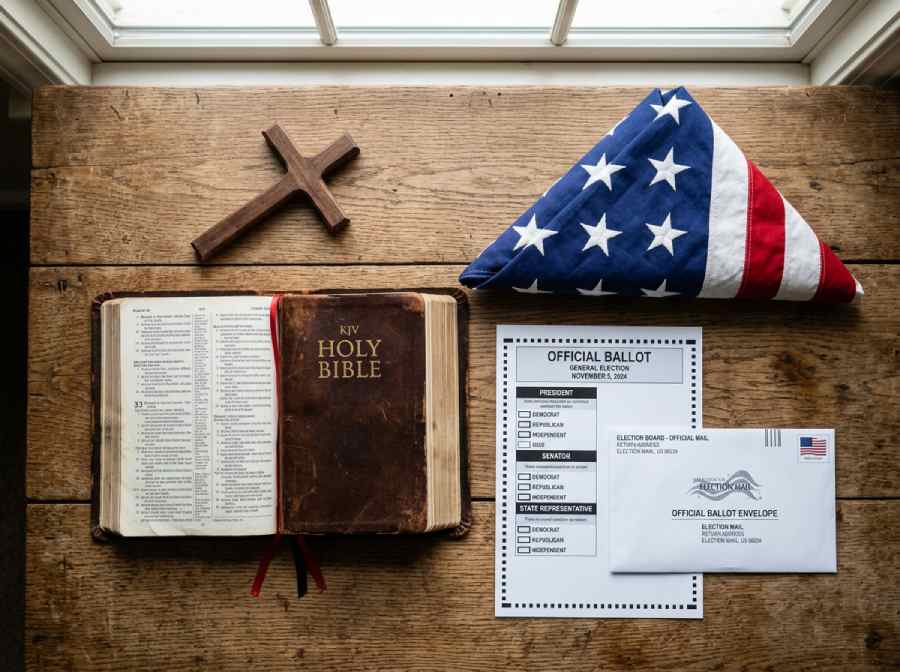
Can Christianity and Politics Work Together in Civic Life?
The relationship between Christianity and politics can be difficult to sort through, especially when we are trying to follow Christ faithfully. Faith shapes how we see the world, and civic life affects the communities where we live, worship, and serve. At the same time, politics can create real tension in our churches. So we have to ask honest questions: Should ministers preach political sermons? How can the church speak to political issues without losing its spiritual mission?
I believe the best place to begin is the Bible. God’s Word gives us wisdom for public life. It also reminds us that the gospel, church unity, and spiritual growth must stay at the center of what we do.
How Christians Should Engage Christianity and Politics
When we talk about Christianity and politics, we should first remember what makes one a Christian. We are called to reflect Christ in the world around us. That means we can take part in public life with discernment, humility, and integrity. In Matthew 5:13, Jesus describes His followers as “the salt of the earth,” pointing to the kind of influence that helps preserve what is good.
In that passage, Jesus teaches that we are meant to influence the world in a preserving and meaningful way. Like salt, our presence should affect what we touch. If we lose that distinct spiritual influence, our witness becomes weaker.
Ministers and Politics: The Primary Role of Christian Leaders
Ministers of the gospel have an important calling. They shepherd God’s people and teach God’s Word. As members of the body of Christ, we need spiritual leaders who help us grow, stay unified, understand Scripture, and keep Christ at the center of our lives.
That is why I believe political issues should be handled with care from the pulpit. When preaching becomes too focused on candidates, parties, or partisan agendas, the gospel can get pushed to the side. Our churches can also become divided.
Respect for Governing Authorities
According to Romans 13:1-2, governing authorities serve a role within God’s sovereign order. As Christians, God calls us to respect lawful authority. We should also recognize that resisting authority without just cause carries both civic and spiritual accountability.
This does not mean we are to follow the government blindly or stay silent about what matters. It means we are to participate with wisdom. We must honor God in our conduct, respect lawful authority, and avoid behavior that would bring reproach on the name of Christ.
Addressing Social Issues with Biblical Wisdom
I am a firm believer that the church should not be silent about moral concerns. Still, politics should never take the place of the gospel. Our ministers can speak about justice, compassion, integrity, and ethical decision-making. But those issues should be taught through biblical truth, not partisan messaging.
When handled with humility, this approach helps us think biblically about Christianity and politics while keeping Christ at the center of the church’s witness.
Faithful Stewardship in the Pulpit
In 1 Corinthians 4:1-2, Paul teaches that ministers should be seen as servants of Christ. They are also faithful stewards of the truths God has entrusted to them. Their responsibility is not to seek personal influence. Instead, they must handle God’s message with humility, faithfulness, and care.
For that reason, I believe ministers should approach civic issues as servants of Christ, not as partisan voices. Their priority should be to strengthen our faith and help us obey God’s Word, not allow partisan beliefs to separate or divide the church.
When ministers lead with wisdom, they help us think carefully about how we vote, serve, speak, and advocate. They also help us keep political loyalty from becoming the center of church life.
Biblical Values in Politics and Civic Duty
The Bible gives us a framework for public life. It calls us to honor our rightful civic duties while remaining faithful to God’s commands. In everyday terms, our civic engagement should be thoughtful, peaceful, and rooted in biblical values.
Jesus spoke to this directly:
In Matthew 22:21, Jesus teaches that we should honor our civil obligations while reserving worship, obedience, and ultimate allegiance for God alone.
That means we can meet earthly responsibilities without letting earthly systems take God’s place in our hearts. The Bible also calls us to live with justice, mercy, and humility in public life.
Micah 6:8 teaches that God calls His people to live with justice, mercy, and humility. These values should guide how we speak, vote, serve, and engage with others in public life.
Navigating Conflicts Between Faith and Government
At times, our faith and government policies may come into conflict. When that happens, we need discernment and humility. We should respond with respect rather than hostility. Some helpful steps include:
- praying for wisdom
- engaging in respectful dialogue
- supporting what aligns with biblical truth
These steps help us stand firm in our faith while still seeking the good of our communities.
Examples of Peaceful Christian Engagement
Think about a local church facing a zoning law that limits community outreach. Instead of reacting with anger, church leaders can pray for wisdom and meet respectfully with city officials. They can explain how the outreach helps the community, listen to concerns, and look for a solution that honors both the church’s mission and local requirements.
Or consider a Christian parent who disagrees with a proposed school policy. Instead of sending reactive messages or posting divisive comments online, parents can choose respectful dialogue. He or she can ask thoughtful questions, listen carefully, and speak with grace. That kind of response represents Christ well, even when disagreement remains.
Jesus’ Teaching on Earthly Duty and Devotion to God
Matthew 22:16-22 gives us another helpful picture of how to keep earthly duty in its proper place.
In this passage, religious leaders tested Jesus with a political question about taxes. Rather than accepting the terms of their challenge, Jesus pointed to the coin bearing Caesar’s image. He then taught that we should fulfill rightful earthly responsibilities while giving God the worship, loyalty, and obedience that belong only to Him.
That answer still speaks to us today. Earthly responsibilities have their place, but worship, trust, and obedience belong to God.
Applying Biblical Wisdom Today
So what does this look like today? We can vote, pay taxes, obey laws, advocate for justice, and pray for leaders while staying anchored in biblical conviction.
When disagreement comes, a peaceful approach bears a better witness than hostility. We can seek wise solutions, work respectfully with others, and serve our neighbors. This is one way Christianity and politics can be approached with both conviction and grace.
In the end, I believe Christianity and politics can coexist when our faith stays first. We must remember that as followers of Christ, we are to be courteous, peaceful, and faithful in every civic setting. Because faith has the power to heal, we can enter public life with compassion and conviction. And through it all, our witness should point others to Christ.
Discover more from BELIEVING FAITH
Subscribe to get the latest posts sent to your email.

Yeah, quite a fragile subject – it can ignite bad discussions.
But, surely enough, we DO have our civic duty to fulfill.
Thanks for the reflection!
Lucas, thanks for visiting with me, and for your comment.