
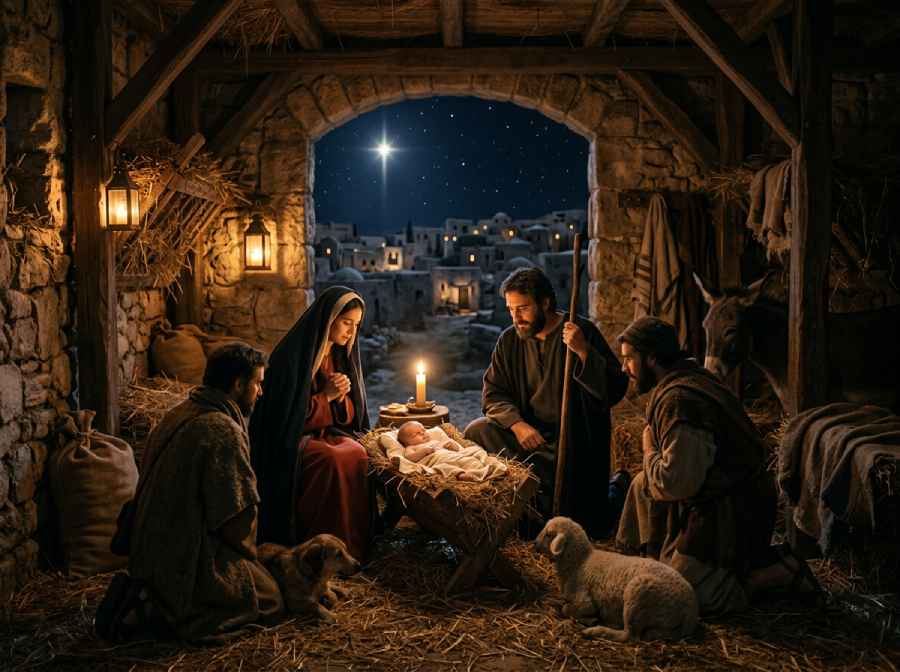
What if the birth of Christ is more than the beginning of the Christmas story? What if it is the moment heaven touched earth and God’s greatest gift entered the world to save humanity? The birth of Jesus Christ is the heart of Christmas, the fulfillment of prophecy, and the foundation of the true meaning of Christmas.
Christ is the fulfillment of ancient promises. His birth tells the true story of Christmas and Easter combined.
While Christmas celebrates Jesus‘ arrival, Easter commemorates His sacrifice and resurrection. His birth set the stage for His ultimate purpose.
We have Christmas because Jesus was born, and through Him, we find the hope of Easter.
Christmas is a joyous celebration—a time for gift-giving and fellowship. However, our attitude toward Christmas should be more about receiving God’s greatest gift to humanity—His Son (John 3:16).
The Birth of Christ in the Christmas Story
For Christians around the world, Christmas Day holds deep spiritual meaning. On this sacred day, we thank God for Christmas, which represents the birth of our Lord and Savior, Jesus Christ. Jesus is God’s ultimate gift to humankind.
The Angels Announce the Savior’s Birth
Outside Bethlehem, shepherds watched their flocks under the quiet night sky. Suddenly, the darkness broke open with the radiant glory of the Lord, and an angel stood before them. This moment is recorded in Luke 2:1-20, where the angel announces the Savior’s birth to shepherds outside Bethlehem.
Fear swept over the shepherds, but the angel quickly turned their terror into wonder. He told them not to be afraid because joyful news had come for all people. That very day, in the city of David, a Savior had been born—Christ the Lord.
The shepherds would find Him not in a palace, but wrapped in cloth and lying in a humble manger. Then heaven seemed unable to stay silent. The sky filled with angels praising God and proclaiming glory in the highest, with peace on earth and goodwill toward mankind.
Heaven Marvels at the Incarnation
Imagine the awe and wonder among the angels as they witnessed the Word become flesh—He who formed both holy angels and evil spirits now arrived as a fragile, speechless infant.
Those present—Mary, Joseph, and the shepherds—felt astonishment, humility, and reverence as they witnessed the love that brought heaven to earth.
The Son of God willingly left heavenly riches to become poor for us, so that through His poverty, we might find true richness (2 Corinthians 8:9).
Even the angels struggled to comprehend the depth of such incredible love.
Why God Chose the Shepherds
Have you ever wondered why God announced Christ’s birth to common shepherds? God could have sent His angel to the synagogue or the king’s palace.
Yet God chose lowly shepherds to receive the good news first. Why?
By visiting the shepherds, the angel revealed God’s grace toward all people, not just a select few.
Had the angel gone to the synagogue, the Pharisees might have claimed Christ was sent only to them because of their self-righteous works.
Why the Birth of Christ and the Messiah’s Coming Matter
Why Humanity Needed a Savior
Adam was the first person to sin by disobeying God. According to the Bible, his punishment was death—not only physical death, but eternal separation from God.
Because Adam is the ancestor of all humanity, we share in his sinful nature. The Bible states that “all have sinned and fall short of the glory of God” (Romans 3:23).
Because Adam believed Satan’s lies, he surrendered the authority God gave him. This is why, according to Christian doctrine, Jesus had to come into the world: to redeem us from Satan’s rule.
To “redeem” means to buy back or rescue. Galatians 3:13 explains that Christ’s sacrifice freed humanity from the curse of sin and spiritual bondage.
Because Adam’s actions affected all humanity, the need for redemption became universal. This sets the stage for Christ’s birth.
Why Christ Had to Become Human
Only a human could redeem mankind, so Christ first had to become a man. Here we see the wisdom of God: He sent His Son to be born of a woman to save us.
While Christ had to be born to save us, His birth also had another purpose: to reveal God’s true nature to humanity (John 14:7).
Through Jesus, we see what God is like. The Bible says that “no one has ever seen God” (John 1:18), but Jesus has made Him known through His character, love, and compassion.
So Christmas is not only about salvation. It is also about understanding who God truly is.
The True Meaning of Christmas: Jesus Is the Reason for the Season
Christmas as God’s Greatest Gift
At Christmas, we gather with friends and family to exchange gifts and share festive meals. It is a tradition that fills the season with joy, love, and warmth.
Gift giving reflects God’s ultimate gift to humanity. As you shop for gifts or open one given to you, remember the greatest gift ever received.
Let that truth inspire gratitude and encourage you to show warmth and love not only during Christmas, but throughout the year.
Returning to the True Meaning of Christmas
We are slowly drifting away from the true meaning of Christmas. There was a time when people commonly said Merry Christmas.
Then, subtly, “Christ” was replaced with “X,” and “Merry Christmas” became “Merry Xmas.” Today, commercialism often overshadows the story of Christ.
However, the Bible states that Jesus is the Word of God. He was with God in the beginning, and He is God.
All things were made through Him, and without Him, nothing was made. He came into the world, but the world did not know Him (John 1:1-14).
“God so loved the world that He gave His only begotten Son…” We must never forget that Jesus is the reason for the season.
This Christmas, open your Bible and rediscover the birth of Christ in Matthew 1, Matthew 2:1-12, and Luke 2. As you reflect on the birth of Jesus Christ, you honor the Gift Giver and receive the hope, salvation, and spiritual renewal found in Him.
Discover more from BELIEVING FAITH
Subscribe to get the latest posts sent to your email.
