
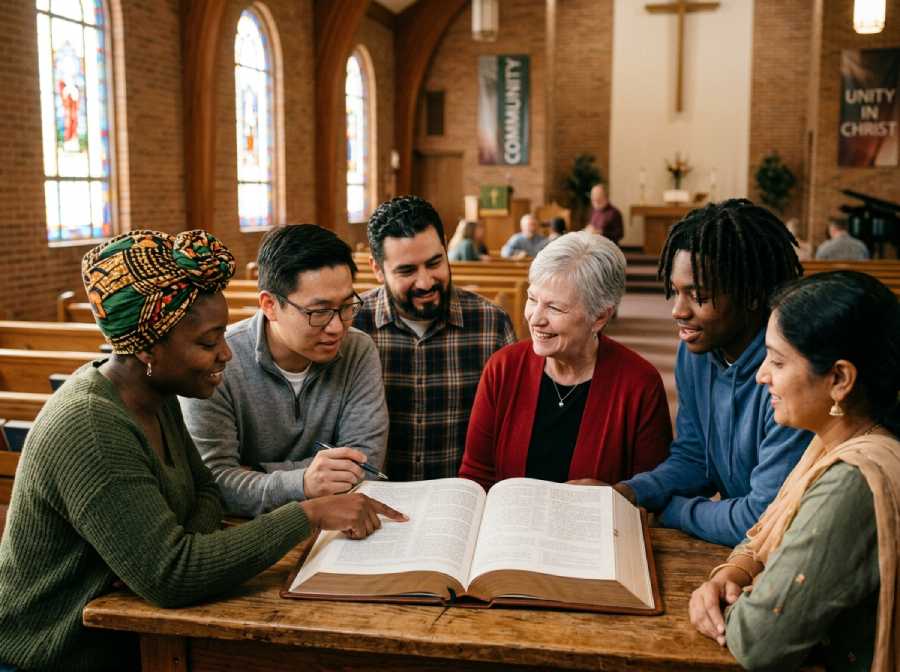
Have you ever wondered why Christians are not more united? I have too. It is not an easy question. Christianity includes many denominations, traditions, and ways of understanding Scripture. In a previous post, I talked about what it means to be a Christian. I shared that followers of Christ should reflect His character. Still, when we look at the broader Christian community, it can be hard to see Christians united as one.
Why Are Christians Divided?
One reason Christians are divided is that we often differ in doctrine, worship style, tradition, and interpretation of Scripture. Those differences can matter, but they can also become barriers when they take precedence over Christ Himself. That is why we need to start with Jesus’ prayer for His followers in John 17:20–21.
Jesus Prayed for Christian Unity
In this prayer, Jesus was not praying only for His first disciples. He was also praying for everyone who would later believe in Him through their message. His desire was clear. He wanted all believers to be united as one. That kind of unity would reflect the close relationship He shares with the Father. It would also help the world recognize that God sent Him.
That brings us to the heart of Christian unity. If Jesus prayed for His followers to be one, then division among believers should concern us. Denominations, traditions, and personal preferences may differ, but they should never become greater than our shared faith in Christ. The unity Jesus described does not mean everyone thinks exactly alike. It is rooted in love, truth, humility, and a shared desire to glorify God.
That is why unity is not optional for believers. It is part of how we show the world who Christ is.
Why Christian Unity Matters
Christian unity is not just a nice idea. It is central to the message of Jesus, and it affects how believers represent Him to the world. When Christians are divided by pride, prejudice, politics, or personal preference, people see conflict instead of Christlike love.
Christianity is founded on the life, teachings, death, burial, and resurrection of Jesus Christ. He taught His followers to love God and love their neighbors. He also taught them to love those who oppose them. Still, we do not always live that out well.
When faith becomes too closely tied to prejudice, political labels, or human traditions, division grows within the body of Christ.
Jesus said, “By this everyone will know that you are my disciples, if you love one another” (John 13:35). He also taught us to “love your neighbor as yourself” (Matthew 22:39). These verses remind us that Christian unity must be rooted in love, humility, compassion, and obedience to God’s Word.
Being honest about the problem does not mean we lose hope. It means we return to the example of Jesus. We ask whether our attitudes, words, and actions reflect His heart.
That honest reflection helps us see how sincere differences can sometimes turn into unhealthy division.
When Differences Become Division
Denominations can make Christian unity feel complicated. That is especially true when sincere differences turn into separation or suspicion. Each denomination may hold certain beliefs and practices. Those beliefs shape how its members worship and understand Scripture.
For example, some churches practice baptism by full immersion. Others practice sprinkling or infant baptism. These differences often come from sincere attempts to interpret Scripture. Yet the Bible warns us not to treat Scripture as a matter of merely personal interpretation. The Amplified Version states:
“No prophecy of Scripture is a matter of or comes from one’s own [personal or special] interpretation.”
—2 Peter 1:20 [AMP]
This does not mean believers will never wrestle with difficult passages. We will. But our opinions should remain submitted to Scripture. They should not become reasons to look down on one another.
Choosing God’s Word Over Personal Preference
That is why priority matters. If we want to understand why Christians are not more united, we need to ask what we are putting first. Are we placing denominational identity above biblical truth? Are we allowing human interpretation to carry more weight than God’s Word?
I believe Christians can grow in unity when we place God’s Word above pride, preference, and division. Loving God, loving others, and walking in humility should shape our daily lives.
When Scripture guides us more than personal opinion or denominational loyalty, we become better witnesses of Christ. But this kind of unity does not happen by accident. It takes effort. The Apostle Paul encourages believers:
“Make every effort to keep the unity of the Spirit through the bond of peace.”
—Ephesians 4:3 [NIV]
Practical Steps Toward Christian Unity
Because unity takes effort, it has to show up in the way we think, speak, listen, and serve. Christian unity does not require every believer to agree on every secondary issue.
Still, it does require humility, love, and a willingness to pursue peace. If we want to see Christians united as one in daily life, here are several practical steps we can take:
- Focus on what unites us—faith in Jesus Christ, trust in God’s Word, and the command to love God and love others.
- Listen with humility—hear other believers respectfully instead of assuming the worst about their motives or beliefs.
- Follow Christ’s example—let Scripture shape our words, attitudes, and actions, especially when disagreements arise.
- Serve together when possible—support efforts that reflect biblical values such as compassion, forgiveness, generosity, and care for others.
- Choose peace over pride—make every effort to preserve unity without compromising the truth of God’s Word.
When Christians practice these steps, unity becomes more than an idea. It becomes a visible testimony of Christ’s love and helps us think about unity in a more balanced way.
United in Christ, Not Uniform in Everything
A balanced view of Christian unity recognizes that unity does not mean uniformity. Christians may differ on certain practices, traditions, or secondary doctrines, but we should not let those differences overshadow our shared faith in Jesus Christ.
Our witness is strongest when love, humility, truth, and compassion are visible in the way we treat one another.
If we want to be Christians united as one, we have to begin by examining our own hearts. We can listen instead of condemn; serve instead of compete; seek peace without abandoning biblical truth. When we do, we reflect Christ’s character and show the world what it means to belong to Him.
Discover more from BELIEVING FAITH
Subscribe to get the latest posts sent to your email.

This is so true. We get caught in differences and forget love.
We all belong to Him.
If we choose love and humility, unity can grow.
Yes, Willie, we sometimes place more emphasis on our denominational doctrine than on biblical soundness and obedience to God’s word.
Thanks for reading, commenting, and visiting with me.