
Estimated reading time: 8 minutes
I am aware that many women are feeling uneasy with the potential overturning of Roe v. Wade. As a Christian who is pro-life, I feel compelled to express my opinion on the ongoing abortion debate. The pro-life versus pro-choice debate has been a contentious issue since 1969. I firmly believe that having an abortion is morally wrong. No one has the right to take a life, and it’s unjust to control someone’s body, as it would take away their God-given right to choose. I understand that many of my fellow Christians do not share my views. Therefore, I believe having an open and respectful conversation about this is essential and a way to honor each other’s perspectives.
Some Christians mistakenly believe that God authorizes them to enforce the teachings of the Bible by compelling others to conform to their religious beliefs and practices. However, just as God does not impose Himself on anyone, neither should we. Instead of acting as judges or enforcers of God’s law, we should follow Jesus Christ’s teachings of compassion over judgment. Therefore, it’s crucial to have a direct conversation about abortion, what it means to be a Christian, and the right to free choice as divinely guided, always remembering to approach the debate with compassion and understanding.
Pro-life vs. Pro-choice
Pro-life and pro-choice labels are confusing because they force people to choose one of two boxes: pro-life or pro-choice. That means you must put all of your moral, political, religious, and practical beliefs into one of these two boxes. However, by having an open dialogue about abortion with some of my friends, I discovered that many people who oppose abortion say they are pro-life. The problem I have with that is that they are only concerned with the life of an embryo or fetus.

Pro-lifers are not concerned about the lives of women who have unwanted pregnancies. While they advocate for the life of the child in the womb, once born, they don’t have much to say about the children of these mothers. Pro-lifers vote against child welfare legislation that would help support unwanted babies; also, many of the pro-lifers that I know are in favor of the death penalty.
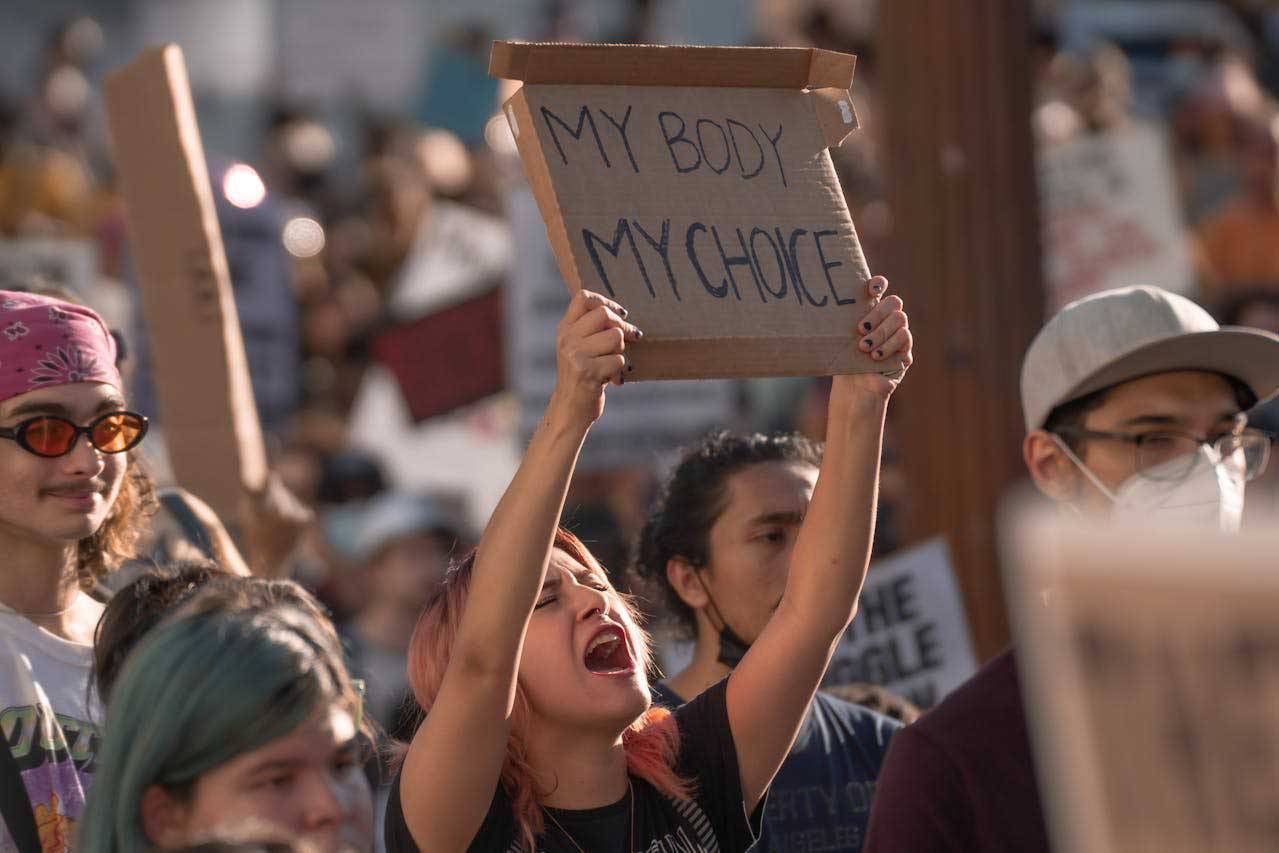
People who identify as pro-choice agree that everyone has the fundamental human right to decide when and whether to have children. When someone identifies as pro-choice, they are saying it is okay to choose abortion to end an unplanned pregnancy. They believe freedom of choice is a fundamental human right, and we must respect and acknowledge these individual choices, even if they differ from our own beliefs.
Roe v. Wade
Roe v. Wade, a pivotal decision by the United States Supreme Court, stands as a beacon of women’s rights, affirming a woman’s right to choose to have an abortion without undue government interference under the U.S. Constitution. This ruling not only invalidated numerous federal, state, and abortion laws in the U.S. but also marked a significant shift in the country’s legal and social landscape.
In 1969, Norma McCorvey (Jane Roe) found herself in a deeply personal and challenging situation. Pregnant with her third child and living in Texas, where the law prohibits abortion except to save the mother’s life, Roe sought an abortion. In addition, her journey, marked by legal battles and personal turmoil, led to a lawsuit filed on her behalf against District Attorney Henry Wade, arguing that Texas abortion laws violated the Constitution. The U.S. District Court for the Northern District of Texas ruled in Roe’s favor, prompting Texas to appeal to the U.S. Supreme Court.
The Supreme Court’s decision in Roe v. Wade sparked an ongoing national debate about abortion, underscoring the weight of its role in shaping the country’s legal and social fabric. The discussion revolved around the legality of abortion and the appropriate authority for making such determinations. Should the American people have a say, or should the matter be entrusted to the Supreme Court?
In 1973, the Supreme Court ruled in favor of Roe, citing the Fourteenth Amendment to the U.S. Constitution, which was interpreted to encompass the right to privacy. This right, as the court explained, safeguards a woman’s decision to have an abortion, as it falls within her personal and intimate choices. The court also underscored that this right to privacy is not absolute.
Fast Forward
Leaked documents written by Justice Samuel Alito suggest that the Supreme Court is considering overturning the landmark Roe v. Wade decision. This development has sparked significant political debate in the United States. Democrats are advocating for the codification of Roe v. Wade into law. At the same time, Republicans have historically opposed it, arguing that the leak is part of an effort to prevent its overturning.
Is Abortion Christianity vs. Politics?
Are we reverting to Dark-Age Christianity, when the church burned people for transgressing God’s commandments? Are we so obsessed with our self-righteousness that we have subdued our knowledge about God, His Law, and the grace He provided before there was a law? Do we know where God is today, whether He is on Mount Sinai or Mount Zion? Can anyone keep the Law of God?
I think all Christians should stand against Abortion. One of the Ten Commandments is, “You shall not murder” (Exodus 20:13). Abortion is murder. However, I also believe that Christians should strive to be doers of God’s word. The commandment “Do not murder” is only one of the Ten Commandments we refer to as God’s Law. So, what about the other nine commandments? Do we get extra points from God because we oppose Abortion? Or is saving the unborn the only requirement of a Christian? This kind of thinking, to me, is a problem.
Christians should embody Christ’s character, just as Christ embodied God’s character. Therefore, good Christian character includes pursuing godliness, meekness, humility, truth, righteousness, love, joy, peace, gentleness, kindness, patience, humility, unity, forgiveness, and contentment.
I heard someone say, “To be Christian is to be Republican is to be pro-life.” Really? Do all Republicans identify as Christians? Do all Democrats identify as pro-choice? And do all Christians identify with the Republican Party? Is Christianity only about saving the life of the unborn? Is it likely that Christianity has something to do with living righteously in these troubled times? Much of the uproar about Abortion appears to be about Christianity, but it is genuinely rooted in politics. Politicians recognize the power of the Christian community. Many politicians are garnering the support of Christians to accomplish their political agenda.
Is Abortion the Only Sin?
Political rather than religious considerations entangle the contentious issue of abortion. I want to remind my fellow Christian adherents that the divine principle of free will is paramount. God does not impose His will upon us. Did God coerce you into embracing Christianity? Although Christians universally acknowledge that God hates sin, does God mandate its avoidance? Does He compel you to adhere to His commandments? The answer is a resounding no. He grants us autonomy of choice. Notably, while it was in God’s power to prevent Adam’s transgression, He opted to afford him the freedom of choice.
You, Christian, who want to imprison a woman for having an abortion, have you forgotten the story of the adulterous woman in John chapter 8? The scribes and Pharisees brought to Jesus a woman whom they caught in adultery. They said, “We caught this woman in the very act of adultery. Moses commanded (in God’s Law) that she should be stoned. But what do you say?” But Jesus did not answer them. He stooped down and wrote on the ground with His finger. When they continued asking Him, He stood up and said, “Let the one who is without sin throw the first stone.” One by one, they went out, being convicted by their conscience. Then He said to the woman, “Where are your accusers? Has anyone condemned you?” She answered, “No.” And Jesus told her, “Neither do I condemn you; go, and sin no more.”
God Forgives Sin
Jesus was the only one in the crowd who had no sin. He could have condemned the woman, yet He did not. Why? Jesus knew God did not call Him to be a judge. Only God the Father had the right to judge (condemn). Christians are not judges but disciples. You, who condemn a woman for having an abortion, what is your sin? You cannot force someone to serve God or obey His commandments. So, should we just allow women to murder their unborn child? God forbid. We should intervene with kindness rather than punishment. But the choice is ultimately hers.
Ironically, many people who say they are pro-life are also pro-choice. They advocate for saving the life of the unborn and refuse to wear a facemask to protect others from the COVID-19 virus. Pastor Greg Locke, pastor of the Global Vision Bible Church congregation in Mount Juliet, Tennessee, was so shaken about being told to wear a facemask that he said his congregation would ask them to leave if they wore it to his church. WOW!
These same people who protest wearing a facemask think it is right to tell a woman what she can do with her body. Let us be thankful to God for forgiving us for our bad choices. And let us not forget that God gave us the right to free choice. It is our God-given right to choose. Now, ask yourself, “Will you be a disciple or a judge?”
